Sea Turtles on Cape San Blas
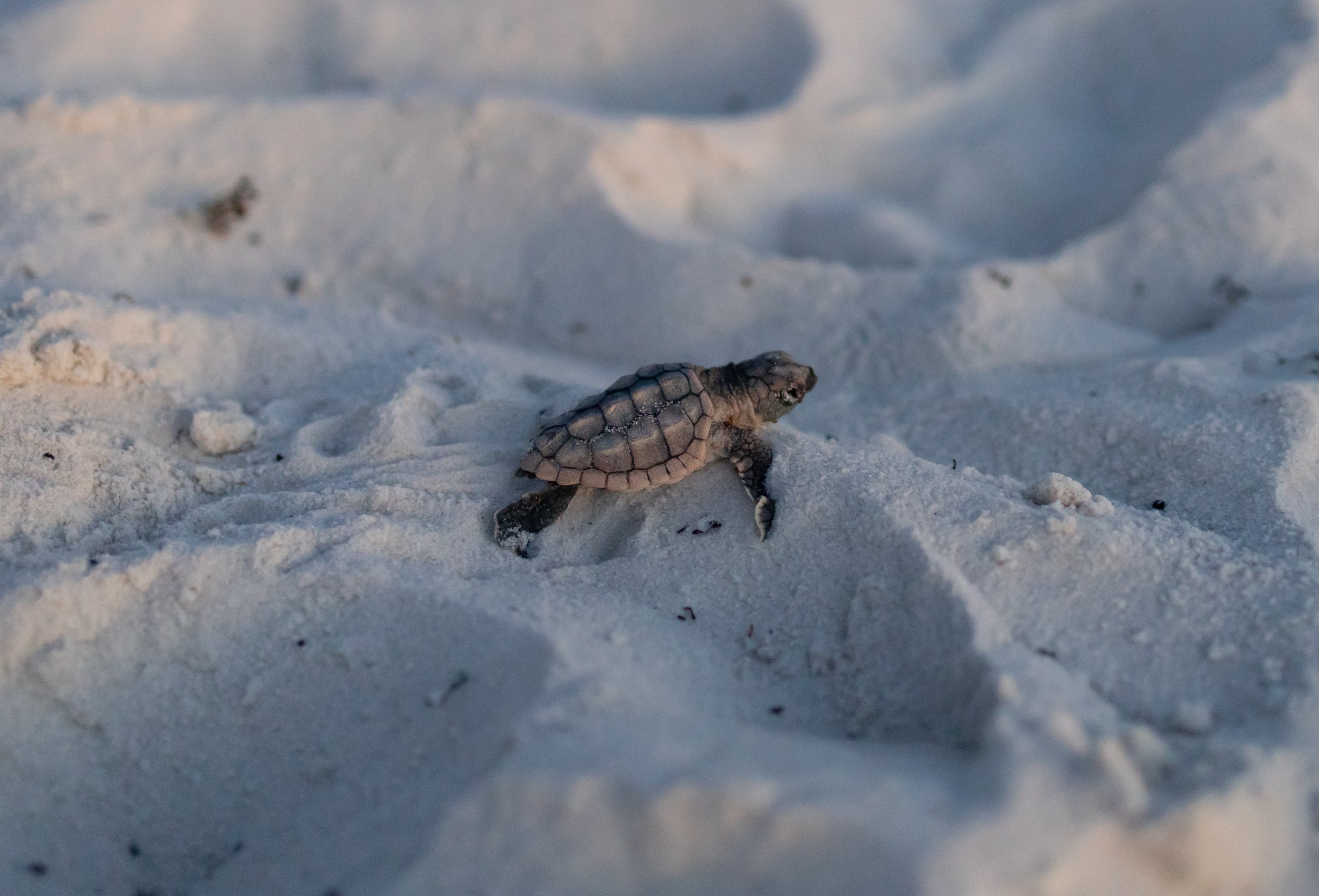
Sea turtle nesting season in the Florida panhandle runs from May 1 to October 31. Each morning, a team of dedicated, trained docents patrol the beach in search of momma turtle’s crawls (tracks). We dig down to find the top of the clutch (eggs), measure how deep it is, then put a predator screen and caution tape around the nest.
Approximately 50 days after the nest is laid, the eggs will hatch during the night. The hatchlings will follow the moonlight to get to the ocean. Three days after we see signs of hatching, we dig it all up and evaluate the nest. We count how many eggs hatch, did not hatch, as well as any dead or live hatchlings left in the nest. This information is sent to FWC to analyze the health of the sea turtle population.
After our evaluation, all nest contents are returned to the hole to rot away and nourish the beach. If a live hatchlings is found during our evaluation, we watch it walk down to the water. We do not take it to the water, as the hatchling’s walk down is critical for the for its ability to imprint on the sand and navigate.
You can help our turtles by keeping our beaches CLEAN, DARK, and FLAT.
Clean - Pick up any trash you see on the beach and take out what you brought.
Dark - Mommas and hatchlings use the moonlight over the water to sea. Use turtle safe red lights at night. Even one small phone flashlight can cause an entire nest of babies to go the wrong way.
Flat - Take your items off the beach at night including chairs or tents. Fill in your holes and knock down your sandcastles. Mommas and babies both can get trapped in these obstacles.
If you are lucky enough to see a sea turtle, be sure to stay a great distance back. Do not touch, disturb, harass, pursue, or capture, a sea turtle, its eggs, or its nesting site. Violators may be subject to large fines and/or prison time. If you see a turtle in distress, call 888-404-3922.
In the winter, our turtles can get cold stunned. When water temps in St Joseph Bay fall below a certain threshold (around 55 F), turtle’s metabolism slows to the point where they cannot pick up their head out of the water to breath, eat, move out of the way of a boat, etc. When this happens, trained individuals have to go get them! We take them to a rehab facility to warm up. Then, they are released into the ocean when the cold snap passes.
Visit the Forgotten Sea Turtle Center at 1001 10th Street in Port St Joe to learn more about our sea turtles! I’m the turtle and tortoise dietitian there. I’m also a nesting and cold stun docent. I have my bachelor’s degree in marine biology from UNA. Feel free to ask me any questions about sea turtles or other marine creatures during our photo session!
-Maranda